
Social Welfare Councils and Community Work in Japan
Historical Development and Contemporary Challenges
Keiko Nishida
1. Purpose and Methods of the Study
Like Germany, Japan was a defeated nation in World War II. However, the two countries followed markedly different trajectories in their postwar political and economic systems. Today, both nations have adopted democratic governance and market-based economies while developing a wide range of social welfare and social security systems. In addition, both countries train professionally qualified social workers who provide support for people’s daily lives and deploy them in relevant practice settings.
Although there are many differences in the macro-level social environment, as well as in the meso-level of practice and micro-level individual support, a comparative examination of social welfare phenomena in the two countries can offer valuable insights for the future development of social welfare in each context. As a foundation for advancing such comparative research, this paper aims to clarify the historical development and current challenges of Social Welfare Councils in Japan.
Social Welfare Councils are nonprofit organizations responsible for community work. The author recognizes that community work also holds significant importance in Germany. The guarantee of people’s right to subsistence is a responsibility of the state and the public sector. However, public assistance and other benefits provided under state and public responsibility alone are insufficient to fully secure the safety net necessary for maintaining people’s lives.
At present, the safety net is sustained through the interaction of four sectors: the public sector (local governments), the informal sector (family, neighbors, and friends), the private nonprofit sector, and the market sector (for-profit organizations). The market sector emerged and became established from around the 1990s, in parallel with the expansion of neoliberal economic policies and neoconservatism as macro-level trends. Prior to this, social resources were primarily composed of three sectors: the public, informal, and nonprofit sectors.
Among these, the public and informal sectors have long historical roots dating back to pre-modern and even feudal periods, evolving alongside the state. The nonprofit sector developed gradually with modernization and, in the case of Japan, was formally institutionalized after World War II. Within the field of social welfare, the nonprofit sector consists mainly of two types of organizations: social welfare institutions, such as orphanages, homes for the elderly, and facilities for persons with disabilities; and Social Welfare Councils, which engage in community work.
More than 80 years have passed since the end of World War II. Along with broader social transformations, the nature of social resources established in the postwar period has also changed. Social Welfare Councils have gradually evolved over time, taking on increasing roles in addressing social issues in addition to community work. In this respect, they differ from organizations responsible for community work in Germany. By organizing these distinctive features of Japan, this paper contributes to the field of social work research.
The methodology of this study is qualitative. It involves collecting and analyzing historical documents examined during the establishment of Social Welfare Councils in the postwar period, as well as materials published during periods of organizational transformation. The analysis focuses on how these organizations have understood and fulfilled their social mission, from the perspective that they are shaped by macro-level environmental influences.
Figure 1 illustrates the macro-environment of social welfare as conceptualized by Takayoshi Furukawa. According to Furukawa, people’s lives are situated within four overarching systems: political, economic, cultural, and social. Social welfare is organized to ensure that people’s lives achieve a state of well-being; therefore, it is inevitably shaped and influenced by these broader systems. This study adopts the same perspective, viewing Social Welfare Councils not as entities that change merely over time, but as organizations that evolve in response to transformations in political, economic, cultural, and social contexts.
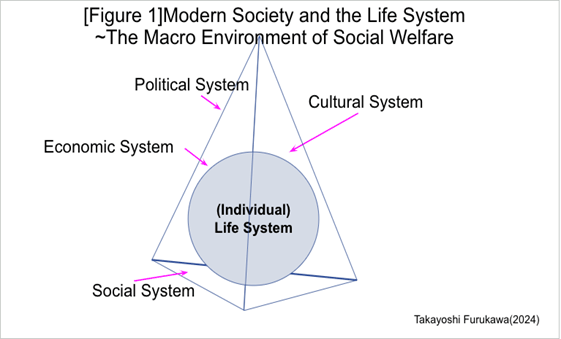
Figure 1: Modern Society and the Life System – The Macro Environment of Social Welfare (Source: Created by the author)
2. Historical Development of Social Welfare Councils in Japan
In prewar and wartime Japan, the concept of guaranteeing fundamental human rights was virtually nonexistent, as the country operated under a wartime state regime. A major transformation occurred under postwar occupation policies following Japan’s defeat, culminating in the promulgation of the Constitution of Japan in 1946, which explicitly guaranteed fundamental human rights, including the right to maintain a minimum standard of living [1].
The General Headquarters of the Supreme Commander for the Allied Powers (GHQ) implemented a wide range of policies in accordance with the goals of demilitarization and democratization. Among these were policies related to social welfare. Prior to the war, the use of public assistance in Japan carried a strong social stigma. The government treated public assistance in a highly restrictive manner, and many citizens tended to discriminate against those who relied on it. However, under the guidance of GHQ, the principle that public assistance is a responsibility of the state was introduced, and the development of social welfare systems began progressively even before the promulgation of the Constitution.
A directive directly related to the establishment of Social Welfare Councils was the “Six Principles for Social Welfare Administration,” issued in November 1949. One of these principles called for the establishment of councils at the national and prefectural levels to coordinate social welfare activities among social welfare organizations and facilities. This fifth principle led to the creation of the National Council of Social Welfare and prefectural Social Welfare Councils. Although initiated under GHQ directives, these organizations were also strongly desired by private welfare practitioners who had been operating social welfare facilities under extremely difficult conditions before and during the war. After necessary deliberations and consensus-building, Social Welfare Councils were formally institutionalized in the Social Welfare Services Act of 1951. At that time, the concept of community work had not yet been incorporated; instead, the primary focus was on coordination and support among welfare-related organizations centered on social welfare facilities.
The National Council of Social Welfare, established in 1951, was formed through the integration of three prewar and wartime organizations: the Japan Social Work Association, which conducted research and coordinated welfare facilities on a modest scale; the Doho Engokai, which had supported military personnel before the war and later assisted repatriates and war victims; and the national organization of commissioned welfare volunteers (Minsei-iin) [2] (6), who served as community-based advisors and counselors. The policy direction to establish Social Welfare Councils at the municipal level was explicitly indicated in May 1952.
In fact, the concept of municipal Social Welfare Councils had already been proposed in 1950 in the “Basic Framework and Conceptual Plan for Social Welfare Council Organizations”, prepared by the Social Welfare Council Preparatory Office. This document, grounded in the principles of community organization and community work, outlined the following:
Purpose:
To promote the welfare of local residents through mutual cooperation between social welfare practitioners and community residents interested in social welfare.
Functions:
- To investigate social welfare issues within the community, collect relevant data, and formulate and implement action plans based on deliberation.
- To facilitate the implementation of these plans by relevant organizations or to carry them out directly. Examples include improving child welfare, public health, living conditions, recreational and cultural facilities, and seasonal childcare services.
- To promote public understanding of and interest in social welfare activities.
- To cooperate with community chest fundraising campaigns.
However, given that prewar and wartime values and lifestyles persisted in Japanese society even under occupation, it is reasonable to assume that the significance of municipal Social Welfare Councils was not widely understood across the country. The same can be said for the methods and practices of community organization and community work. While some individuals likely possessed the capacity to recognize their importance, many may have responded to these initiatives as top-down directives from a centralized authority, resulting in formalistic rather than substantive implementation.
In response to these challenges, the “Basic Guidelines for Social Welfare Councils”, discussed in the following section, were drafted in 1962 by staff members of prefectural Social Welfare Councils. These guidelines aimed to establish, in practice rather than in form alone, organizations and professional personnel capable of carrying out community organization and community work nationwide.
It should also be noted that municipal Social Welfare Councils were formally incorporated into the Social Welfare Services Act in 1983, while ward-level Social Welfare Councils were included in 1990. By 1998 nearly 100 % of municipal Social Welfare Councils had acquired legal corporate status rather than remaining voluntary organizations.
In Japan, a government-led municipal merger initiative was implemented between 1999 and 2010, resulting in a reduction in the number of municipalities to 1,727 by 2010. As only one Social Welfare Council can be established per municipality, the total number of municipal Social Welfare Councils also declined accordingly.
3. Evolution of the Basic Guidelines for Social Welfare Councils
The Basic Guidelines established in 1962 defined the nature of Social Welfare Councils as “voluntary, private organizations operating within a defined community, in which residents take the leading role, and which aim to promote the welfare of residents in accordance with local conditions through the participation and cooperation of both public and private stakeholders concerned with social welfare, public health, and the improvement of living conditions.”
Regarding their functions, the Guidelines stated that Social Welfare Councils should identify unmet welfare needs within the community through methods such as research, group discussion, and public communication, formulate appropriate welfare plans, and, as necessary, promote collaboration among residents, coordinate relevant organizations and institutions, and develop social resources through organizational activities. While they may implement such plans themselves when necessary, the primary emphasis was placed on organizational and coordinative functions.
This framework was grounded in the understanding that, although Social Welfare Councils aim broadly to promote residents’ welfare and therefore have diverse functions, their fundamental role lies in the comprehensive application of community organization methods within local communities. Furthermore, because their core function is organizational activity, they were expected to promote the implementation of plans necessary for problem-solving while avoiding direct service provision in principle, so as to prevent friction or competition with existing organizations and to maintain trust among collaborating institutions. However, exceptions were acknowledged: in cases where appropriate service providers did not exist or where local conditions warranted it, Social Welfare Councils were expected to undertake direct service provision proactively. This tendency was particularly evident at the municipal level.
In terms of organizational structure, the Guidelines stipulated that Social Welfare Councils should be systematically organized at municipal, prefectural, and national levels, with municipalities serving as the basic unit, based on the principle of resident participation. For these reasons, the 1962 Guidelines are characterized as representing a “community organization model,” centered on the principle of resident leadership.
Subsequently, in response to social changes—particularly the rapid increase in the population aged 65 and older and the decline in family caregiving functions—new social issues emerged. Welfare policy identified these challenges as urgent priorities and shifted toward developing a system in which individuals could receive welfare services while continuing to live in their own homes, rather than relying on institutional care. This shift involved both diversification and expansion in the provision of care services for older adults and persons with disabilities.
At the same time, the public sector faced pressures to reduce its organizational and fiscal scale, leading to a reliance on the nonprofit sector as the primary provider of such services. Against this policy backdrop, the Basic Guidelines were revised, resulting in the formulation of the New Basic Guidelines for Social Welfare Councils in 1992.
The revised Guidelines incorporated the principle of “resident participation” into the definition of organizational character and identified “resident-led activities” as a key operational principle. Notably, among the seven specified functions, the third function explicitly included “planning and implementation of welfare activities and services.” Furthermore, municipal Social Welfare Councils were tasked with promoting projects tailored to local conditions, including the planning and provision of welfare services. They were also expected to collaborate with both public and private welfare actors to establish service delivery systems responsive to individual needs, develop community welfare centers, and promote the expansion of welfare services—while also directly engaging in service provision themselves.
This marked a significant departure from the 1962 principle that direct service provision should, in principle, be avoided. Consequently, Social Welfare Councils came to be characterized as adopting a “service provision model,” with many municipal councils positioning service delivery as a core activity.
More than three decades later, in 2025, the Basic Guidelines for Social Welfare Councils 2025 were formulated. In these Guidelines, the principle of resident participation was incorporated into the organization’s “mission” and further elaborated. Among the six operational principles, emphasis was placed on “responding to residents’ needs”, “strengthening the foundation for resident activities”, and “integrated development of individual support and community building.”
While the major shift from 1962 to 1992 was from a “community organization model” to a “service provision model”, the 2025 Guidelines indicate another transformation. The functions of municipal Social Welfare Councils are defined in terms of responding flexibly to local conditions, with “planning, implementation, and support of welfare activities and services” identified as a core function. The Guidelines emphasize the importance of comprehensively understanding residents’ needs, local resources, and the status of welfare activities, and of planning and implementing initiatives that go beyond existing institutional frameworks. They also stress collaboration with diverse actors to enhance both the quantity and quality of welfare services, as well as maintaining essential service delivery systems in coordination with local governments and stakeholders.
Thus, the 2025 Guidelines neither advocate avoiding direct service provision nor strongly promote it as an organizational obligation. Instead, they shift the emphasis toward responding to local conditions and sustaining service delivery systems. This can be understood as a transition from the 1992 framework, reflecting contemporary approaches such as community welfare governance developed in the 21st century.
The author expresses concern regarding the 1992 shift, noting that engaging directly in service provision may lead to managerial challenges and potentially undermine the intermediary or mediating functions of Social Welfare Councils as highly public-oriented nonprofit organizations. For example, when councils simultaneously provide services such as home-help care and care management, there is a risk of client monopolization or conflicts with principles of rights protection. Furthermore, allocating staff to service provision may result in the neglect of community organization and community work.
It remains an important task for future research to examine how the 2025 Guidelines may address or mitigate these concerns, and to continue monitoring developments in practice.
4. Increasing Disasters and the Role of Social Welfare Councils
Due to its geographical conditions, Japan experiences large-scale earthquakes on a regular basis. In recent years, the frequency of flood damage has also increased as a result of climate change. Following the 1995 Great Hanshin-Awaji Earthquake, the number of individuals engaging in volunteer activities to support disaster-affected areas expanded significantly. At the same time, the idea that specialized volunteer centers dedicated to disaster response are necessary for the effective coordination of such activities became widely recognized, based on experiences in affected regions and information disseminated by the National Council of Social Welfare.
Social Welfare Councils have long been engaged in the training and coordination of welfare volunteers in their routine activities and possess in-depth knowledge of local community life. For these reasons, it has become standard practice for them to take responsibility for the establishment and operation of disaster volunteer centers. As a result, disaster response has been incorporated as a formal component of the operational framework of municipal Social Welfare Councils (cf. also article by Harth).
The specific functions involved in the operation of disaster volunteer centers are outlined in Table 1.
Source: https://www.bousai.go.jp/kaigirep/kentokai/bousai_volunteer/dai1kai/pdf/05shiryo.pdf |
Table 1: Functions of Disaster Volunteer Centers (Source: Created by the author on the basis of the cited source)
In addition to operating disaster volunteer centers in the event of an actual disaster, Social Welfare Councils also engage in risk management activities. These include conducting training exercises for the establishment of disaster volunteer centers in preparation for emergencies, as well as collaborating with local residents on disaster preparedness initiatives. Furthermore, when other municipalities are affected by disasters, they dispatch staff members to provide support.
However, Social Welfare Councils consistently face financial constraints and struggle with organizational management, which also makes it difficult to secure sufficient staffing levels. This chronic shortage of manpower tends to place an excessive burden on staff during disasters. To better understand this issue, this study examines the case of flooding in Kitaibaraki City caused by Typhoon No. 13 in September 2023.
In Kitaibaraki City, the municipal Social Welfare Council established and operated a disaster volunteer center from September 9 to October 1. The establishment of the center had been prearranged in coordination with the municipal government. As of 2023, the organization consisted of 18 full-time and 8 part-time staff members at the headquarters, and 8 full-time and 22 part-time staff members at facilities and service offices. Figure 2 presents the organizational structure of the Kitaibaraki City Social Welfare Council. An overview of the structure indicates that service provision divisions—such as in-home services for older adults, services for persons with disabilities, and child and family welfare services—constitute a substantial portion of the organization.
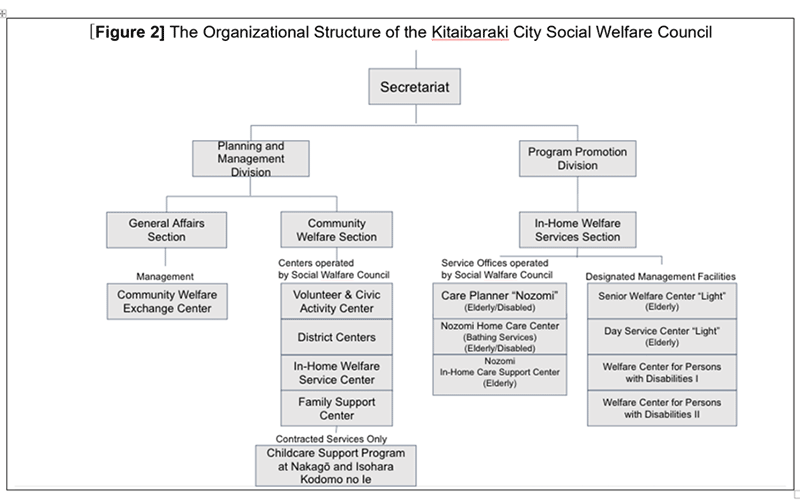
Figure 2: The Organizational Structure of the Kitaibaraki City Social Welfare Council (Source: Created by the author)
An examination of monthly service utilization data for the Home Welfare Service Center and the Family Support Center in fiscal year 2023 reveals that performance in the disaster month did not decline significantly compared to other months. This indicates that staff members of the municipal Social Welfare Council continued to provide routine services with minimal reduction while simultaneously operating the disaster volunteer center.
It is true that the knowledge and skills of community organization and community work are effectively utilized in disaster response. However, even with support from outside the affected area, managing all activities under limited staffing conditions places a considerable burden on personnel. In the case of Kitaibaraki City, a post-disaster review meeting held several months after the event revealed that staff members rarely raised concerns about the magnitude of their workload. Instead, they shared a common understanding that such responsibilities were inherent to their professional mission as members of the Social Welfare Council.
This situation highlights an important issue that must be addressed in preparation for future disasters: the need to ensure the protection of social workers and the establishment of appropriate organizational management practices.
5. Discussion
Social Welfare Councils are private organizations with a high degree of public character and constitute indispensable resources within Japan’s social welfare system. Contemporary Japan faces a wide range of social challenges associated with a super-aging society, declining birthrate, and population decline. As a result, welfare needs directly related to individuals’ rights to subsistence and daily living are becoming increasingly diverse and expanding in scale.
Although all municipalities implement various measures based on state responsibility—most notably the public assistance system—it is not possible to address all welfare needs through these measures alone. While fiscal constraints and institutional limitations of government are major factors, they are not the sole explanation. There exist welfare needs and social issues that cannot be adequately addressed by the public sector. Therefore, Social Welfare Councils serve as essential partners for the public sector. At the same time, they are also important organizations for local citizens.
Social Welfare Councils originated in a top-down manner under the direction of the General Headquarters (GHQ) during the postwar occupation period. However, as private organizations engaged in community organization and community work, they have gradually developed their professional capacity over time while being strongly influenced by the macro-environment of social welfare. Nevertheless, as society has changed, the roles expected of Social Welfare Councils have also evolved, and it has become increasingly difficult to allocate sufficient personnel exclusively to community organization and community work.
Welfare issues in local communities are becoming more complex and diverse each year. Although it is increasingly evident that community organization and community work are effective approaches to addressing these challenges, Social Welfare Councils face a dilemma in fully implementing them. It is anticipated that they will continue to operate a wide range of programs while maintaining this dilemma, grounded in partnership with the public sector.
In Germany, social workers are assigned based on a regional framework that differs from that of Japan. Future research should examine concrete cases of community organization and community work in Germany, and through a comparative analysis with Japan’s Social Welfare Councils and related community welfare organizations, explore more effective approaches to securing a better welfare environment.
References
Fukunaga, F. (2014): The History of the Occupation of Japan, 1945–1952. Iwanami Shinsho.
Furukawa, T. (2024): A Guide to Social Welfare Studies: Toward a Reconstruction of Social Welfare. Chuohoki Publishing.
Ministry of Health and Welfare (1988): Fifty-Year History of the Ministry of Health and Welfare.
National Council of Social Welfare, Japan (2003): 90-Year History of the National Council of Social Welfare.
National Council of Social Welfare, Japan (2010): 100-Year History of the National Council of Social Welfare.
Sams, C. (2007): Reforms by Brigadier General Sams of GHQ: The Origin of Postwar Health and Welfare Policy in Japan. Kiri Shoten.
Takemae, E. (1983): GHQ. Iwanami Shinsho.
Yamaguchi, M. (Ed.) (2024): Collected Materials on Postwar Social Welfare Councils (Vols. 1–3). Suirensha.
Footnotes
[1] Article 25 of the Constitution of Japan stipulates the right to subsistence as follows: „All people shall have the right to maintain the minimum standards of wholesome and cultured living. The State shall endeavor to promote and extend social welfare, social security, and public health in all spheres of life.”
[2] The system of commissioned welfare volunteers (Minsei-iin) originated in 1917 and is known to have been modeled after the Elberfeld system in Germany.
Zitiervorschlag
Nishida, Keiko (2026): Social Welfare Councils and Community Work in Japan. In: sozialraum.de (17) Ausgabe 1/2026. URL: https://www.sozialraum.de/social-welfare-councils-and-community-work-in-japan.php, Datum des Zugriffs: 17.10.2026